 English
 English
 Português
 Español

If you’ve spent any time in Japan, you’ve probably walked past a restaurant with a sign advertising “teishoku” (定食) and wondered what exactly it means. It’s one of the most common — and most useful — words to know if you want to eat well in Japan without overthinking your order.
The Basics
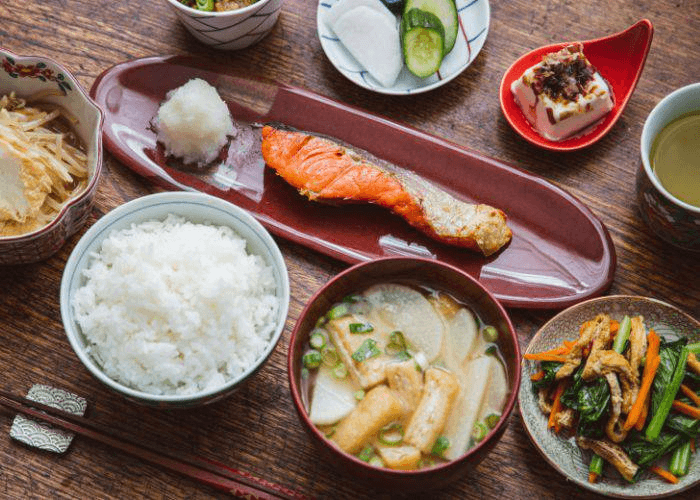
Teishoku simply means a “set meal.” Instead of ordering a single dish, you get a full, balanced tray: a main dish, a bowl of rice, miso soup, and usually one or two small side dishes like pickles (tsukemono) or a small salad. Everything arrives together, and everything is included in one set price.
It’s less a specific dish and more a format — almost any main can be turned into a teishoku by adding rice, soup, and sides around it.
What’s Actually on the Tray
A standard teishoku is built around a concept called ichiju-sansai (一汁三菜), meaning “one soup, three dishes.” In practice, that usually breaks down into:
- Rice — steamed white rice, sometimes with a brown or mixed-grain option
- Miso soup — typically with tofu, seaweed, or vegetables
- A main dish (okazu) — the protein at the center of the meal: grilled fish, fried pork cutlet, tempura, sashimi, or a simmered dish
- Pickles (tsukemono) — a small side of pickled vegetables, almost always included
- One or two extra side dishes — vegetables, beans, tofu, or a small salad, chosen to round out the nutrition and flavor of the meal
There’s even a traditional etiquette to how it’s arranged on the tray: rice is placed on your left, soup on your right, and the main dish toward the back — similar to how a Western plate might be arranged with intention.
A Bit of History
Teishoku’s roots go back much further than you’d expect. The format traces back to ichiju-issai (“one soup, one side”), a simple meal style served in Zen Buddhist temples as early as the 13th–14th centuries, which later expanded into the fuller “one soup, three dishes” version still used today. Because of Buddhist influence, these meals were originally vegetarian — meat wasn’t part of the equation at all.
The set-meal concept spread beyond temples during the Edo period (1603–1868), when inns and eateries began serving travelers and workers complete, affordable meals instead of individual dishes — an efficient way to feed people on the move. It was during the Meiji era (1868–1912), once Japan lifted its long-standing restrictions on eating meat, that proteins like fish and pork became the centerpiece of the modern teishoku. From there, teishoku restaurants spread widely through the 20th century as accessible, everyday dining, and the format has stayed largely unchanged since.
Where to Find It
- Teishoku-ya (定食屋) — casual diners built entirely around this format, often family-run, and a go-to for an affordable, home-style meal
- Regular restaurants — many restaurants, from izakaya to specialty shops, offer a “teishoku” version of their signature dish, especially at lunch
- Department store and station restaurants — a reliable way to get a filling, well-rounded meal quickly while out and about
Common Types of Teishoku
- Shogayaki teishoku — ginger pork, a classic lunch favorite
- Tonkatsu teishoku — breaded, fried pork cutlet
- Saba teishoku — grilled or simmered mackerel
- Karaage teishoku — Japanese fried chicken
- Sashimi teishoku — a small assortment of sashimi with rice and soup
Most teishoku-ya rotate a “today’s teishoku” (本日の定食) based on what’s fresh, which is often the best value on the menu.
Why It’s Worth Knowing
- It’s balanced. A protein, rice, soup, and vegetables in one meal — no extra ordering required.
- It’s affordable. Teishoku sets are usually priced lower than ordering the same items separately.
- It’s fast and casual. No reservation needed — these are walk-in spots, perfect for a quick, satisfying lunch break.
- Rice and soup refills. Many teishoku-ya offer free refills on rice (and sometimes miso soup), so it’s rarely a small meal.
Next time you’re looking for a meal that’s quick, filling, and doesn’t require much decision-making, keep an eye out for a teishoku sign, it’s one of the easiest ways to eat like a local in Japan.
Discovering everyday staples like this is one of the best parts of building a life in Japan, not just visiting it. Contact us today to learn more about our programs and take the first step toward your new life in Japan!