 English
 English
 Português
 Español

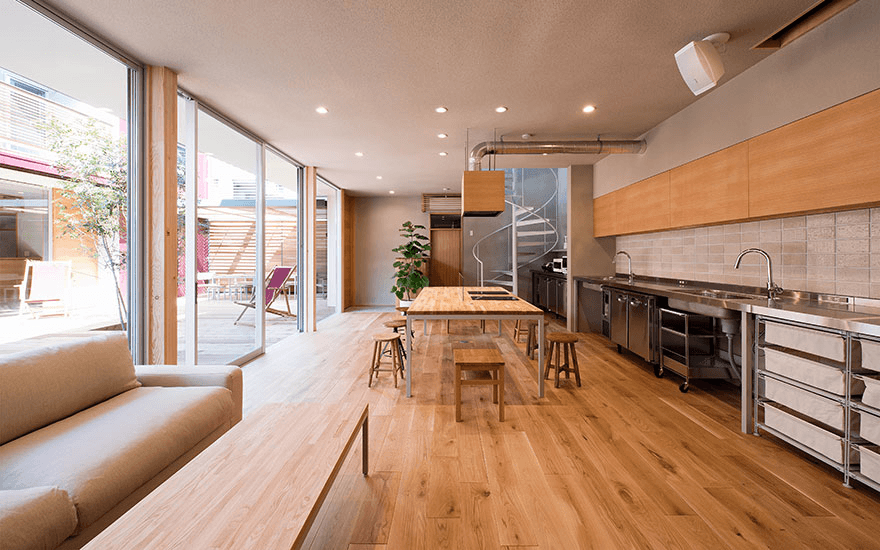
(©Kai Nakamura)
Finding a place to live is one of the first big decisions you make when you move to Japan. Many international students choose a share house, where you have your own private room and share common spaces like the kitchen, living room and bathroom with other residents. It is a popular option, and for good reason.
1. Lower Upfront Costs
Renting a regular apartment in Japan often means paying a deposit, key money, an agency fee and a guarantor fee on top of the first month’s rent. Share houses usually have much simpler and cheaper move-in costs, and many offer flexible short-term contracts. This is a big advantage when you are arriving from overseas and managing a tight budget.
2. Furnished and Ready to Live In
Most share houses come with furniture, Wi-Fi, appliances, and sometimes even bedding and kitchen supplies. You can arrive with a suitcase and settle in right away, instead of spending your first weeks shopping for a bed, a fridge and a washing machine.
3. Simple Monthly Payments
Rent, utilities and internet are often combined into one monthly payment. That makes it easier to plan your budget and avoids the paperwork of setting up gas, electricity and internet on your own, which can be confusing in a new language.
4. An Instant Community
Living with other people means you are never alone in a new country. Your housemates may be Japanese residents, other international students or working professionals from around the world. You can share meals, explore neighborhoods together and make friends from many cultures.
5. Real Language Practice
Daily conversations in the kitchen or living room are a natural way to improve your Japanese (or your English!) outside the classroom. Asking a housemate how to sort the garbage or what to order at a local restaurant teaches you things no textbook covers.
6. Local Tips and Support
Housemates who have lived in Japan longer can help with everyday questions: which supermarket is cheapest, how to use the trains, where to find a good doctor. This kind of support makes the first months much less stressful.
7. Flexibility and Convenience
Many share houses are located near train stations and popular areas for students, and the flexible contracts are ideal if you are not sure how long you will stay. Some also organize events like movie nights, cooking parties or cultural outings.
Things to Consider
A share house is not for everyone, so it is worth thinking about a few points:
- Privacy: You have your own room, but shared spaces mean less privacy than a one-room apartment
- House rules: Cleaning schedules, quiet hours and shared-space etiquette are part of daily life
- Different lifestyles: Your housemates may have different schedules, so choose a house that fits your habits
- Room size: Private rooms are often smaller than a standard apartment
Tips for Choosing the Right Share House
- Check the location and the commute time to your school
- Ask what is included in the monthly fee (utilities, Wi-Fi, cleaning of common areas)
- Look at the house rules and the contract terms before signing
- Find out who lives there: some houses are international, some mostly Japanese, some for women only
- Visit in person or ask for a video tour if possible, to see the shared spaces and the atmosphere
Final thoughts
A share house is more than a place to sleep. It can be your first group of friends, your first Japanese lesson of the day and your home base while you discover a new country. If you are wondering whether this kind of living is right for you, we would be happy to talk it through with you.
Reach out and let’s find the housing option that fits your plans in Japan.